FRCR Radiology Anatomy Revision Guide: How to Revise Effectively for Part 1
Discover essential tips and resources for mastering FRCR radiology anatomy with our comprehensive revision guide. Enhance your knowledge and boost exam readines
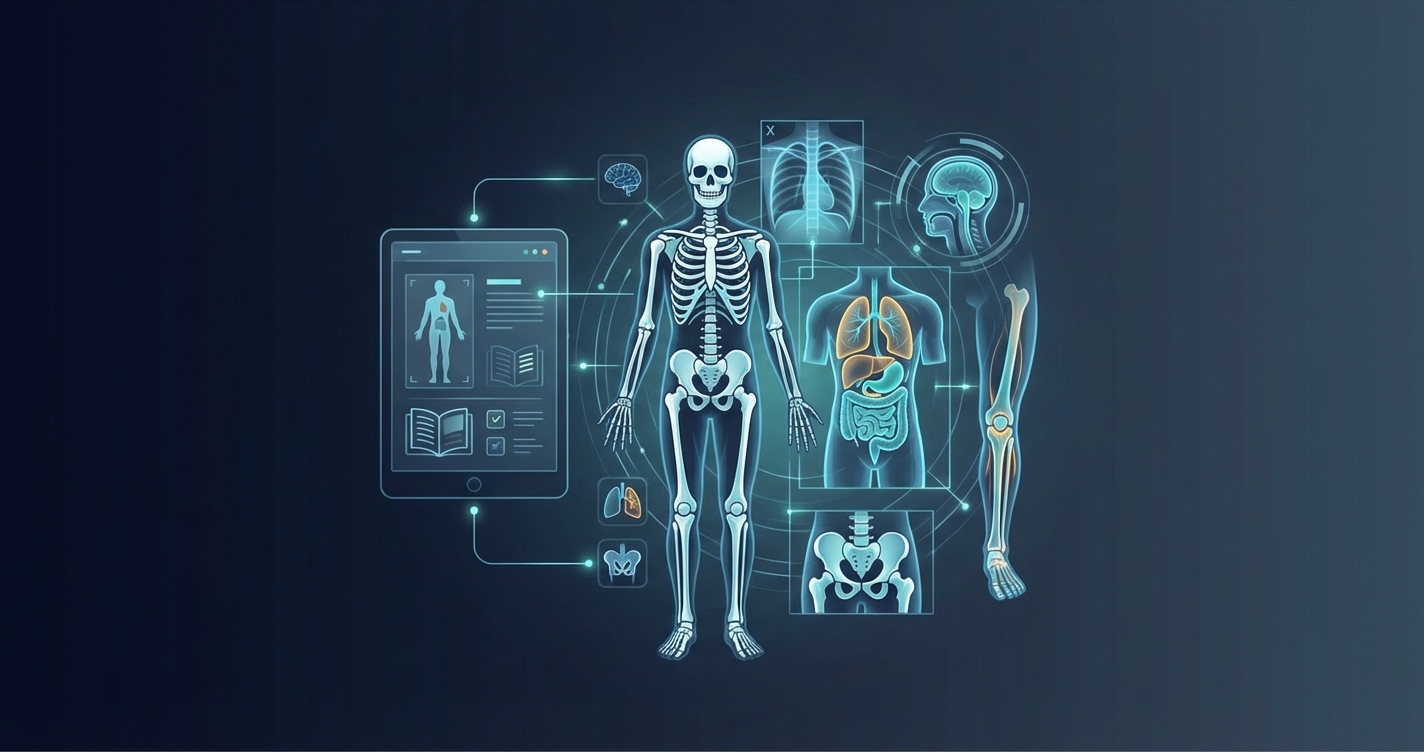
Revising FRCR radiology anatomy is one of the most stressful phases of FRCR Part 1 preparation.
At this stage, FRCR candidates often struggle with time pressure, image overload, and uncertainty about what to revise - not because they lack knowledge, but because anatomy in FRCR is a speed-based, image-recognition exam.
This guide focuses specifically on how to revise anatomy for FRCR Part 1, what to prioritise, common revision mistakes, and how to maximise recall under exam conditions.
This guide is aligned with the Royal College of Radiologists FRCR Part 1 anatomy syllabus.
Why FRCR Anatomy Revision Is Different From Studying Anatomy
FRCR anatomy is not about learning new structures.
It is about:
-
Rapid recognition
-
Orientation
-
Confidence under time pressure
Common FRCR anatomy revision mistakes include:
-
Re-reading textbooks late into preparation
-
Chasing new resources close to the exam
-
Ignoring timing during revision
-
Spending too long on one image
Effective revision means seeing the same anatomy repeatedly, not more anatomy once.
What the FRCR Part 1 Anatomy Exam Actually Tests
-
~100 image-based questions
-
~90 minutes
-
Multiple modalities:
-
CT
-
MRI
-
X-ray
-
Fluoroscopy
-
You are expected to:
-
Recognise normal anatomy
-
Identify labelled structures
-
Move on quickly
This is a recognition exam, not a recall exam.
How to Revise Anatomy for FRCR Part 1 (What Actually Works)
1️⃣ Revise With Real Images Only
At the revision stage:
-
Textbooks add little value
-
Labelled diagrams are insufficient
You should revise using:
-
Exam-style images
-
Cross-sectional anatomy
-
Mixed-modality sets
2️⃣ Revise Anatomy by Modality, Not Region
Revision is more effective when structured by modality.
| Modality | Revision Focus |
|---|---|
| CT | Cross-sectional orientation |
| MRI | Signal-based structure recognition |
| X-ray | Projection anatomy |
| Fluoroscopy | Dynamic and contrast anatomy |
This mirrors how images appear in the exam.
3️⃣ Timed Revision Is Non-Negotiable
During revision:
-
Spend <60 seconds per image
-
Trust first impressions
-
Avoid prolonged analysis
Speed is a skill that must be revised, not assumed.
Normal Variants: A High-Yield Revision Topic
FRCR anatomy commonly tests:
-
Normal variants
-
Asymmetry
-
Structures that appear abnormal but are normal
Failing to recognise variants is a common cause of lost marks during revision and in the exam.
How Many Images Should You Revise Daily?
A sustainable revision target:
-
20–40 images per day
-
Reviewed repeatedly
-
Mixed modalities
-
Under timed conditions
Consistency matters more than volume.
Final-Phase Anatomy Revision Strategy (Last 2–3 Weeks)
-
Stop adding new resources
-
Focus on:
-
Weak anatomical regions
-
Orientation errors
-
Speed drills
-
-
Avoid last-minute textbook reading
Confidence improves with familiarity, not novelty.
FRCR Anatomy Revision: At a Glance
| Area | Revision Priority |
|---|---|
| Images | High |
| Timing | Critical |
| Variants | High-yield |
| New material | Low |
| Repetition | Essential |
Frequently Asked Questions (FAQ)
Can anatomy be revised close to the FRCR exam?
Yes - but only through image-based, timed revision.
Should I read anatomy textbooks during revision?
No. At this stage, they offer low return.
Are normal variants important for revision?
Yes. Very important.
What is the biggest revision mistake candidates make?
Trying to learn new anatomy instead of revising known anatomy faster.
How early should anatomy revision start?
Revision should begin alongside question practice, not after it.
Final Advice
Effective FRCR radiology anatomy revision is about:
-
Repetition
-
Speed
-
Confidence
If you revise anatomy the way it is tested - visually and under time pressure - it becomes one of the most scoring components of FRCR Part 1.
Author
Dr B Gayathri Priyadharshinee
FRCR Radiologist & Educator
Dr Gayathri mentors radiology trainees for international exams, focusing on anatomy recognition, exam strategy, and sustainable revision techniques.
Dr.Gayathri Priyadharshinee
Expert content from the Spotters Academy team. We're dedicated to helping radiologists succeed in their FRCR Part 1 examination.
Ready to ace your FRCR Part 1?
Join thousands of successful candidates who prepared with Spotters Academy.
Start Free Trial